
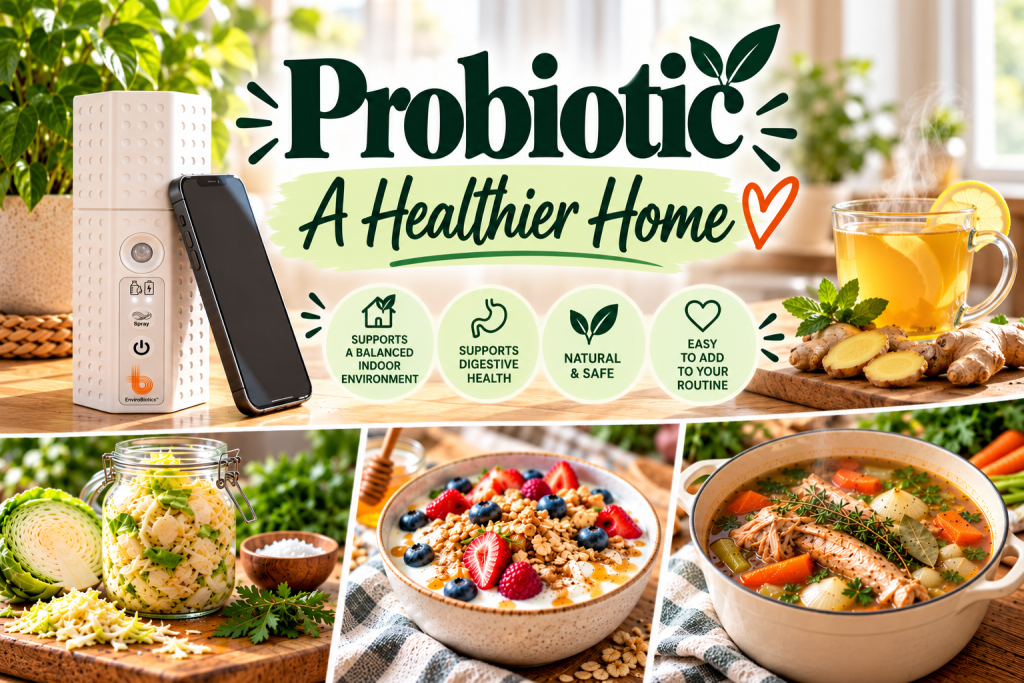
From ginger tea and probiotic-rich yogurt to a surprising new way of thinking about your home, discover simple ways to bring a little more wellness into your fall routine.
There’s something about fall that makes us want to take better care of ourselves.
The mornings get cooler, the days become shorter, and suddenly we’re reaching for warm drinks, homemade soups, and cozy evenings at home.
It’s also the season when busy moms start thinking about keeping their families feeling their best.
But here’s the thing: taking care of your health doesn’t have to mean buying expensive supplements, following complicated routines, or adding another task to your already full schedule.
Sometimes, the simplest habits are the ones worth starting with.
And when it comes to wellness, there’s one fascinating area that deserves a little more attention: the tiny microorganisms that live inside us — and even around us.
Let’s explore five simple ways to care for your gut, your body, and your home this fall.

1. Start Your Morning With Ginger Tea
There’s something wonderfully comforting about holding a warm cup of ginger tea on a chilly fall morning.
Ginger has been used in cooking and traditional wellness practices for centuries. Today, it’s also studied for its potential benefits for digestion, particularly for certain types of nausea.
While ginger isn’t a probiotic, it can be a lovely addition to a balanced, gut-friendly routine.
And the best part? You probably already have everything you need in your kitchen.
Easy Homemade Ginger Tea
Ingredients:
- 4–5 thin slices of fresh ginger
- 1 cup hot water
- A squeeze of fresh lemon
- 1 teaspoon honey (optional)
Instructions:
- Add the ginger slices to a mug.
- Pour hot water over the ginger.
- Let it steep for 5–10 minutes.
- Add lemon and honey if desired.
- Enjoy while warm.
Busy Mom Tip: Slice a small piece of ginger at the beginning of the week and store it in the refrigerator. That way, your morning tea takes almost no preparation.
You don’t need a complicated morning ritual. Sometimes, five quiet minutes and a warm drink are enough to make the day feel a little better.

2. Add Probiotic-Rich Yogurt to Your Breakfast
If you’re looking for an easy way to introduce live microorganisms into your diet, yogurt is a great place to start.
Certain yogurts contain live and active bacterial cultures, which are microorganisms used during fermentation.
Some specific probiotic strains have demonstrated health benefits in research, although those benefits depend on the strain, dose, and individual. Not every yogurt has the same cultures or the same effects.
When shopping, look for labels that mention live and active cultures.
Plain yogurt is especially versatile because you can turn it into a quick breakfast, snack, or even a savory dip.
My Favorite Five-Minute Yogurt Bowl
Ingredients:
- ¾ cup plain yogurt with live cultures
- ½ cup fresh berries or chopped apple
- 2 tablespoons rolled oats
- 1 tablespoon chopped walnuts
- A sprinkle of cinnamon
- A little honey, if desired
Instructions:
- Spoon the yogurt into a bowl.
- Add the fruit, oats, and walnuts.
- Sprinkle with cinnamon.
- Add honey if you prefer a little sweetness.
That’s it!
A colorful, satisfying breakfast that takes just a few minutes to prepare.
The yogurt provides live cultures, while the fruit, oats, and nuts contribute fiber and other nutrients.
Busy Mom Tip: Prepare small containers with your dry toppings in advance. In the morning, all you need to do is add yogurt and fruit.
Healthy eating doesn’t have to be complicated. Sometimes, it’s simply about making familiar foods work a little harder for you.

3. Bring Back the Comfort of Homemade Bone Broth
Few things feel more like fall than a pot of homemade broth simmering in the kitchen.
Bone broth has become popular in wellness conversations, particularly around digestion and gut health.
It’s made by simmering animal bones, often with vegetables and herbs, to create a flavorful broth that may provide protein, gelatin, and minerals in varying amounts.
It’s important to know that bone broth is not a probiotic, and there isn’t strong clinical evidence that drinking it repairs the gut lining or boosts immunity.
Still, it can be a comforting and practical addition to your meals.
And for busy families, it’s wonderfully versatile.
Simple Homemade Bone Broth
Ingredients:
Bones from a cooked chicken
1 carrot, roughly chopped
1 celery stalk
1 small onion, quartered
2 garlic cloves
Water to cover
Optional: parsley, thyme, or a bay leaf
Instructions:
Place the chicken bones and vegetables in a large, sturdy pot.
Cover with water, leaving some space at the top.
Bring to a boil on the stovetop, then choose your preferred cooking method:
Stovetop Method: Reduce the heat to a gentle simmer, partially cover, and cook for approximately 3–4 hours, adding water if needed.
Oven Method: Preheat your oven to 250°F (120°C). Once the broth comes to a boil on the stovetop, cover the pot with an oven-safe lid and carefully transfer it to the oven. Cook for approximately 3–4 hours, checking occasionally to make sure the broth continues to simmer gently. Adjust the oven temperature if necessary.
Strain the broth and discard the solids.
Cool promptly in smaller, shallow containers and refrigerate or freeze within two hours.
Use the broth as a base for vegetable soups, rice dishes, or comforting homemade meals.
One Pot, Two Ways to Cook
Here’s a little trick that makes homemade bone broth even easier: you don’t have to keep it simmering on the stovetop all afternoon.
Once everything comes to a boil, you can transfer an oven-safe pot to a low-temperature oven and let the slow cooking do the work.
If you’re considering investing in a versatile pot for homemade soups, broths, and family meals, the Staub 7-Quart Cast Iron Dutch Oven is one option worth exploring.
Made in France from enameled cast iron, it features a heavy, tight-fitting lid that helps retain moisture and distribute heat evenly. It’s also oven-safe up to 500°F (260°C), so you can start cooking on the stovetop and finish in the oven without switching pots.
And with its generous 7-quart capacity, there’s plenty of room for chicken bones, vegetables, and a flavorful homemade broth.
Of course, you don’t need expensive cookware to make delicious broth. If you already have a large pot that works for your preferred cooking method, start there.
Affiliate disclosure: This section contains an affiliate link. I may earn a commission if you make a purchase through it, at no additional cost to you.
Busy Mom Tip: Freeze the broth in small portions so you can use only what you need.
You don’t have to drink bone broth every morning or treat it like a miracle food.
Think of it as one more simple, nourishing ingredient you can keep in your kitchen.

4. Make Your Own Probiotic-Rich Sauerkraut
Did you know that something as simple as cabbage and salt can turn into a delicious fermented food?
Homemade sauerkraut is one of the easiest ways to explore natural fermentation. During the process, naturally occurring bacteria transform cabbage into a tangy, crunchy food that can contain live microorganisms.
And the best part? You only need two ingredients!
Easy Homemade Sauerkraut — Just 2 Ingredients!
Ingredients:
- 500 g (about 1 lb) fresh green cabbage
- 10 g non-iodized salt (2% of the cabbage’s weight)
Instructions:
- Finely shred the cabbage and place it in a large bowl.
- Sprinkle with salt and massage for 5–10 minutes until the cabbage releases liquid.
- Pack the cabbage tightly into a clean fermentation jar, pressing it down until the liquid covers it.
- Use a fermentation weight to keep the cabbage fully submerged. If more liquid is needed, add a little 2% salt brine.
- Fit a fermentation lid or airlock and leave at approximately 65–72°F (18–22°C), following tested fermentation guidance, until properly fermented, typically around 1–3 weeks.
- Once fermentation is complete, refrigerate.
Busy Mom Tip: Make a small jar over the weekend and keep it in the fridge once fermented. Add a spoonful to sandwiches, salads, or simple family meals.
Small Ingredients, Fascinating Results

5. What About the Good Bacteria in Our Homes?
We’ve explored how simple foods can support our gut health. But here’s something you might not have considered:
What about the bacteria living around us?
Just like our bodies, our homes have their own microbial communities, known as the indoor microbiome.
And while regular cleaning is important, scientists are also exploring how different microorganisms interact within our living spaces.
Meet Environmental Probiotics
This fascinating concept led me to discover BioLogic by EnviroBiotics – a device designed to release selected microorganisms into indoor spaces.
Unlike traditional cleaning products, BioLogic takes a different approach: introducing selected microbes to influence the indoor microbial environment.
It’s an interesting emerging technology, although its health benefits in everyday homes haven’t yet been established by strong independent clinical evidence. It also doesn’t replace regular cleaning or ventilation.
A Little Bonus for Busy Mom Wellness Readers!
If you’re curious about this approach, I’ve arranged a special 15% discount on any BioLogic device.
Your discount is automatically applied when you shop through my link – no promo code needed!
Affiliate disclosure: This is an affiliate link. I may earn a commission from qualifying purchases at no additional cost to you.